Political Education, Frameworks,
and Trainings for
Galaxy Gives Grantees
Political Education, Frameworks,
and Trainings for
Galaxy Gives Grantees
Welcome!
We are honored to support the Galaxy Gives grantee community.
This page offers structured access to Ayni Institute’s educational resources, trainings, and workshops. We empower leaders through social movement education to build organizations, develop their skills, overcome challenges, and succeed on vital issues.
Whether you are new to our frameworks or returning to deepen your practice, this page will guide you.
Start with the pathway below to orient yourself and identify your next step.
Three Foundational Frameworks for Movement Leaders
Below are frameworks for understanding movements, leadership, and history in a time of systemic transition.
Understand Your Movement Ecosystem
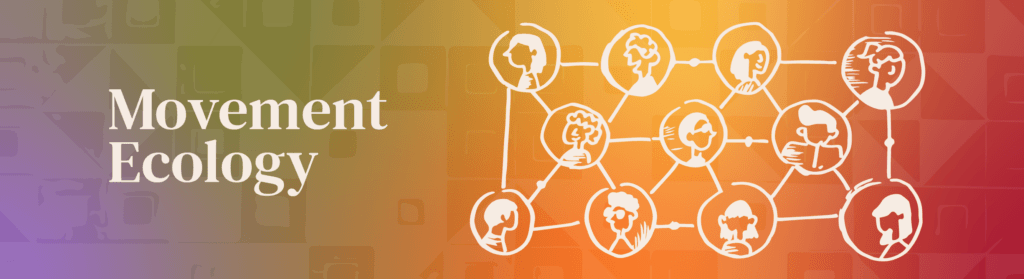
Movement Ecology
If you are working for social change, you are already part of a movement ecosystem.
Yet many leaders experience confusion, tension, or fragmentation across strategies. Organizations struggle to collaborate. Funders see gaps but lack a shared language. Movements experience internal conflict without understanding its roots.
Movement Ecology was developed to address this challenge.
Over the past decade, Ayni Institute has dedicated itself to advancing movement-building education. Our early focus on mass protest and the hybrid model revealed a deeper need: lasting transformation requires understanding the diverse Foundational Theories of Change that coexist within movements.
Movement Ecology offers that broader perspective.
It introduces a way to see movements as ecosystems made up of distinct strategies, each with strengths, limitations, and a necessary role. Rather than asking which strategy is right, the framework helps you understand how different approaches generate tension and collaborative power at the same time.
Through this lens, you can:
- Clarify which Foundational Theory of Change you most often operate within
- Understand the role of other theories within the larger movement
- Distinguish between organizations and movements
- Identify the developmental stage your movement is in
- Transform tension into strategic coordination
Collaboration cannot happen simply because we desire it. It requires clarity about what makes the parts of a movement different in relation to one another.
We call these multiple strategies Foundational Theories of Change. The key to building power lies in their interdependence.
Leaders and philanthropic partners have used this framework to navigate ecosystem conflict, bring emotional clarity to moments of uncertainty, and identify strategic interventions that align with the broader arc of their movement.
Movement Ecology provides the language and structure to move from fragmentation toward multi-strategic power.
Lead in Alignment with the Seasons
Seasons of Leadership
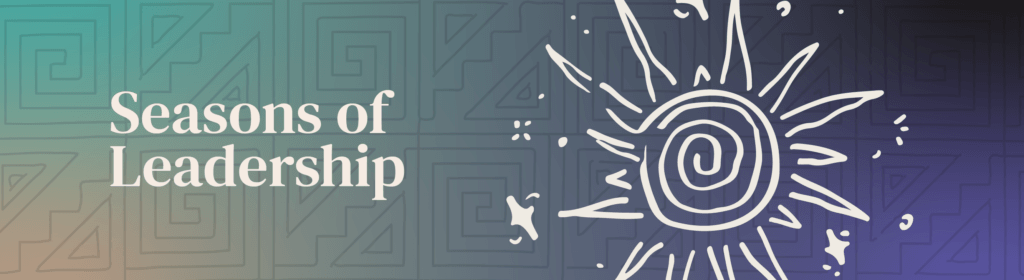
The Seasons framework is an approach that draws inspiration from spiritual and indigenous traditions, which the Ayni Institute has adopted to help us understand the cyclical patterns of our leadership, organizational growth, and broader societal shifts. This framework uses the metaphor of seasons—winter, spring, summer, and fall—to represent the four distinct stages of leadership cycles.
Every stage of this cyclical process serves a distinct purpose, and offers unique gifts and limitations that are instrumental in shaping our approach to leadership, organizational development, and movement strategies.
Winter symbolizes rest, reflection, and the challenges of uncertainty or scarcity. It is a time for introspection, recommitting, and preparing for renewal.
Spring is the season of planting seeds, initiating projects, and embracing new possibilities. It is marked by experimenting, risk-taking, and curiosity.
Summer represents growth, productivity, and the hard work of nurturing what has been started. It is often a time of intensity and focus.
Fall is the season of harvesting results, celebrating accomplishments, and anticipating the winter ahead.
By recognizing and embracing these cycles, we can align our actions with the current season, supporting our effectiveness and well-being. Seasons helps you:
- Gain clarity on the purpose, gifts, and challenges of each leadership season
- Identify the season you are currently in
- Map your leadership cycle in relationship to your organization or movement
- Process the emotional terrain that accompanies each stage
- Develop practical techniques for navigating leadership winters
By recognizing and embracing these cycles, you align your actions with the season you are in. This alignment supports effectiveness, resilience, and well-being across the long arc of social change.
Deepen Strategic Orientation
Modes of Exchange
The challenges of the 21st century are generationally unprecedented. We are facing climate collapse, extreme wealth inequality, political instability, and rapid technological transformation. At the same time, many traditional theories of change were developed for conditions that no longer exist, while older traditions are re-emerging in response to systemic breakdowns.
We are living through a historical transition.
To navigate this moment, movements need more than tactics. They need a deeper understanding of the forces that have shaped societies across time. Without a long-term perspective, we risk repeating past mistakes while attempting to transcend the current capital-nation-state order.
The Modes of Exchange framework emerged from this need.
Influenced by Japanese philosopher Kōjin Karatani, it offers a reinterpretation of history through the lens of exchange.
A New Interpretation of History
Rather than focusing solely on production or ideology, the framework examines the dominant modes of exchange, the ways people and communities exchange goods, services, protection, recognition, debt, violence, belonging, and solidarity.
These exchanges shape economies, political systems, and social formations. They define the tendencies and contradictions of each historical period.
The framework identifies four primary modes of exchange as analytical categories:
Mode A: Reciprocity of the gift
Exchange that creates mutual obligation and relationship.
Mode B: Plunder and redistribution
Extraction through force or authority, followed by redistribution within a political order.
Mode C: Commodity exchange
Market exchange mediated by money.
Mode D: The pure gift
An emerging possibility rooted in giving without expectation of return.
These modes overlap and combine. Their interaction produces the economic and political realities we inhabit.
Why This Matters
Understanding the Modes of Exchange helps movements:
- Identify the deeper structures shaping current crises
- Recognize the limits of certain reforms
- Understand how state, market, and community logics interact
- Situate strategy within a long-term view of history
The goal is not abstract theory. It is orientation.
By understanding the exchange logics shaping our time, we gain clarity about the conditions in which our movements operate and the possibilities for transformation.
Self-Paced Courses
Deepen Your Practice
In addition to framework materials, you have access to structured self-paced courses designed for application and integration. Courses include:
Each course includes video modules, guided reflection, and applied exercises.
Request Course Access
To receive your access code, complete the form below.
You will receive instructions within 2–3 business days.
Live Trainings & Workshops
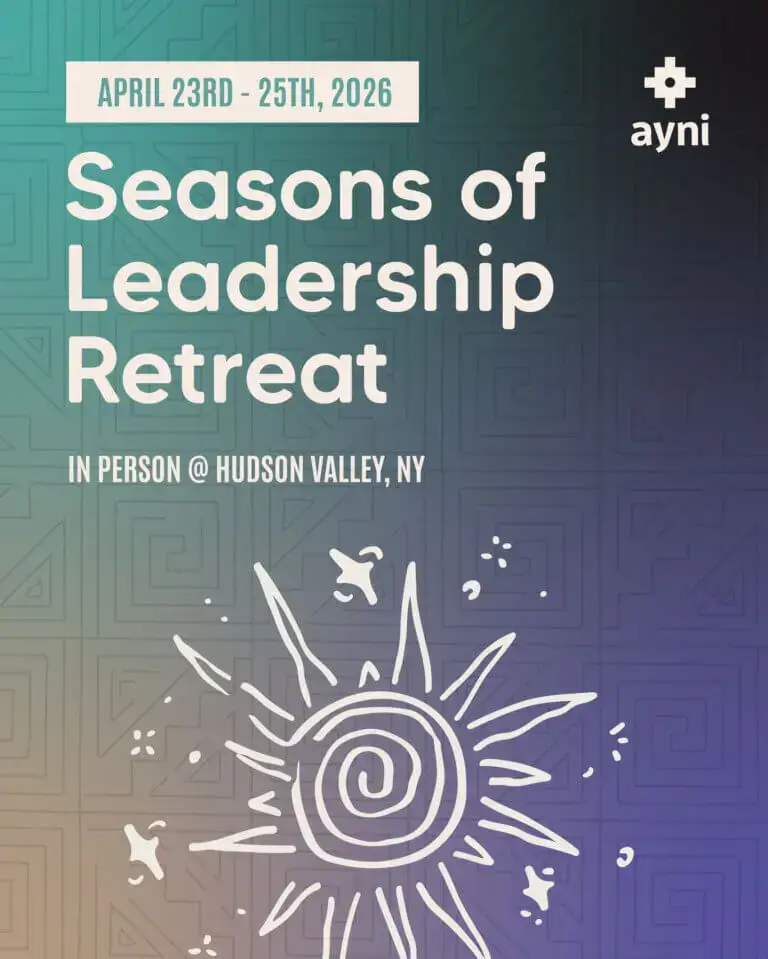
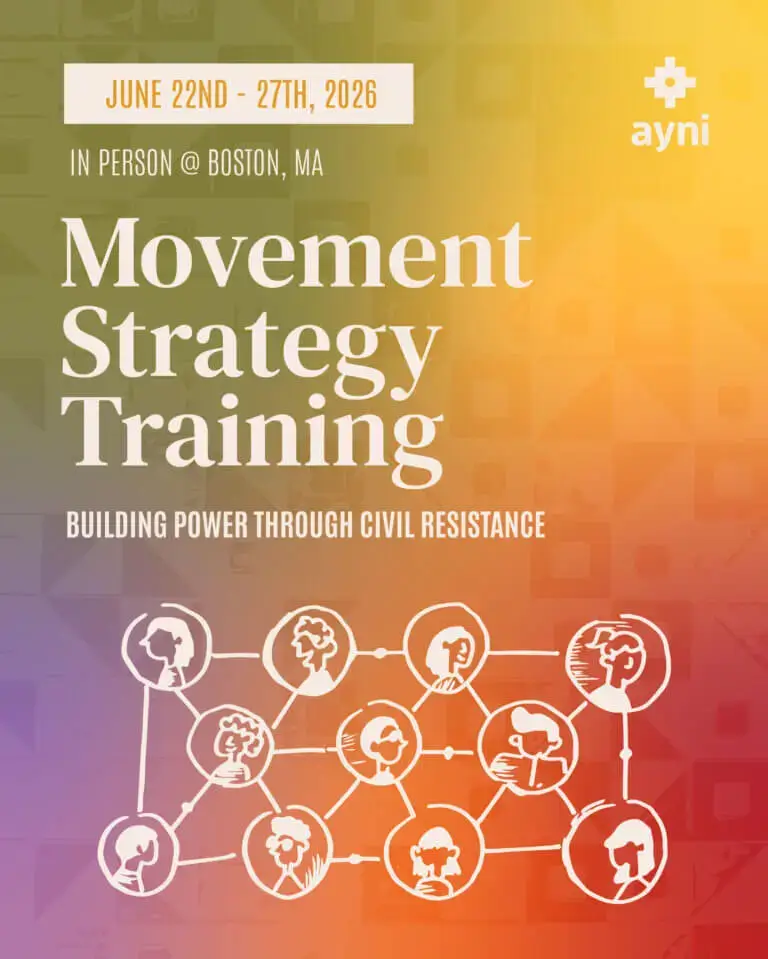
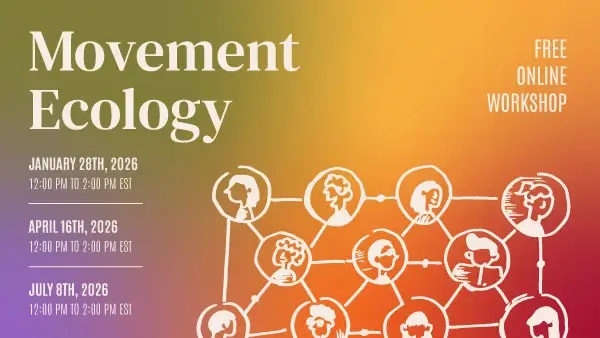
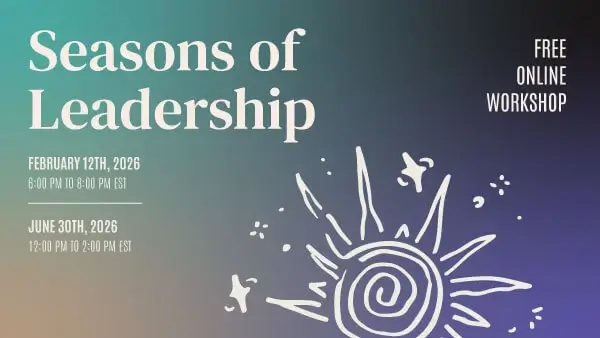
For those seeking deeper engagement, we offer immersive live trainings throughout the year.
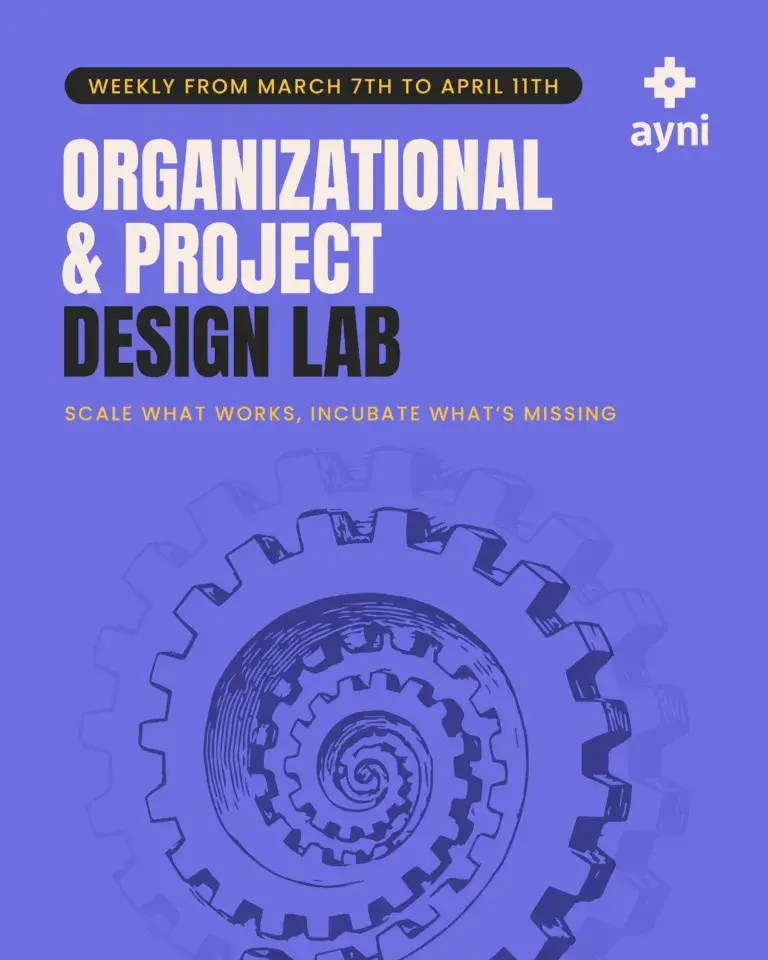
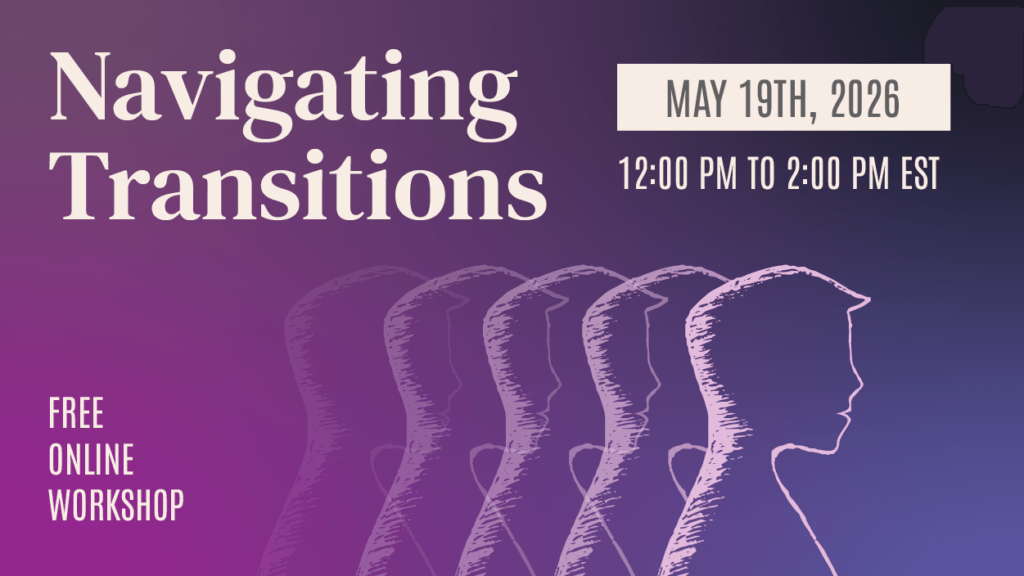
Upcoming offerings include:
Need Support?
If you have questions about accessing materials, selecting a course, or applying to a training, we are here to help.
Contact: ouraynischool@gmail.com
We look forward to supporting your continued growth and impact.