
Who controls the past controls the future.
Who controls the present controls the past."
- George orwell
The Modes of Exchange Framework
A Radical New Framework for Political Economy
A New Interpretation of History
Over the course of the last decade, the Ayni Institute has recognized the need for broader perspectives that can help social movements and their leaders understand history more profoundly. This understanding can help us comprehend the roots of our problems and, thus, how to transcend them.
In this vein, we have been deeply impacted by the works of Japanese philosopher Kōjin Karatani. His framework on the Modes of Exchange has provided us with a deeper understanding of the current and historical social, political, and economic formations of our time. This helps us identify the underlying factors that influence the problems we face today, as well as the limitations of our proposed solutions. Understanding this is critical for us to comprehend the conditions in which our movements operate so we can plan better strategies that are informed by a long-term view of history. Without this understanding, we risk repeating the same mistakes made by other social change movements in the past while attempting to transcend the current capital-nation-state order.
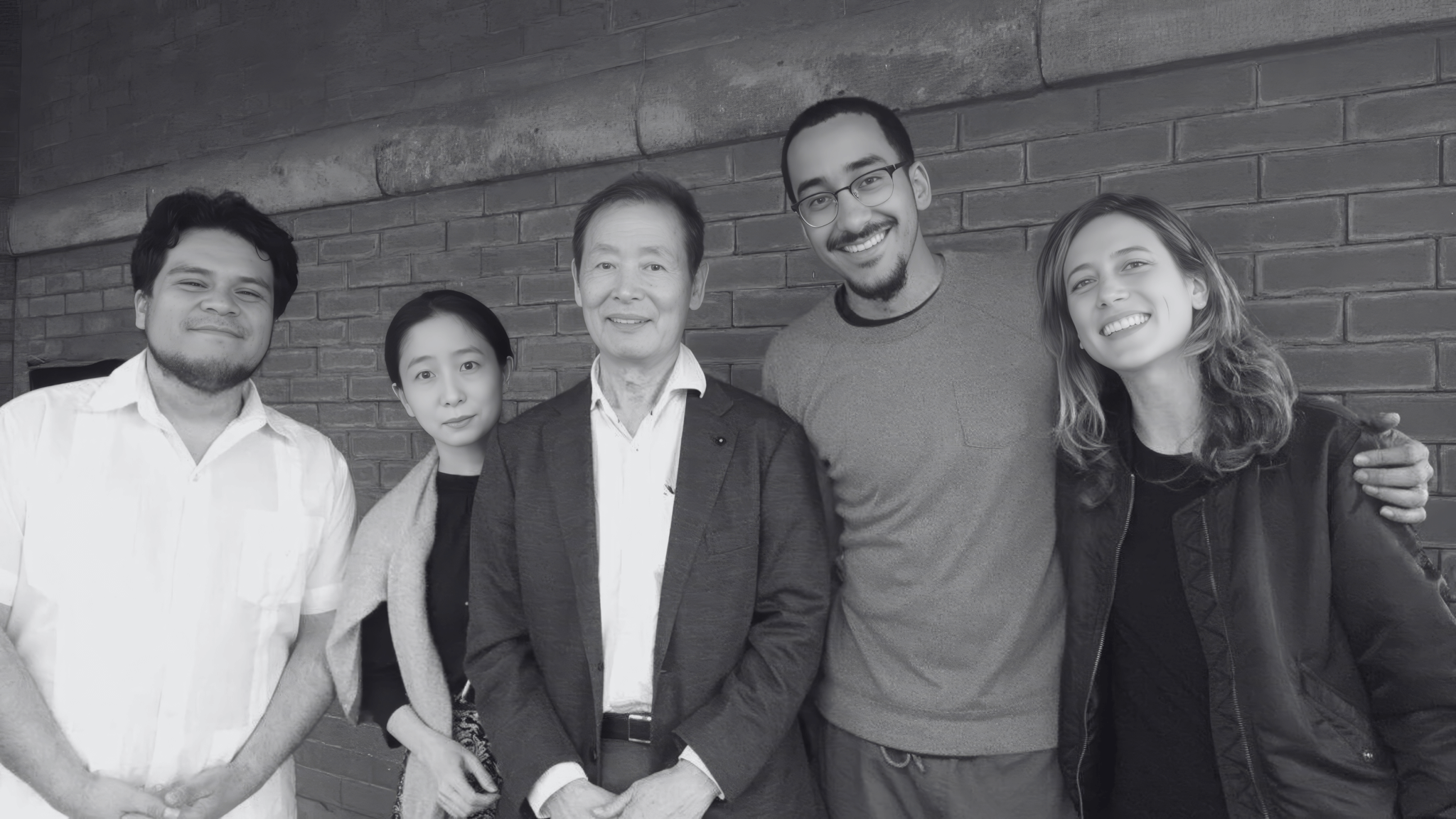
From Left to Right: Carlos Saavedra, Lynne Karatani, Kōjin Karatani, James Hayes, and Lissy Romanow.
An Introduction to the
Modes of Exchange
The Modes of Exchange Framework is a comprehensive and innovative way of interpreting the history and politics of human civilization. This framework provides an in-depth understanding of how humans have interacted with each other and between communities throughout history. Essentially, it focuses on the dominant modes of exchange, which are the various ways in which people have exchanged goods, services, and ideas.
There are four primary modes of exchange that people and communities use to interact with each other: these modes are analytical categories that help us understand complex social phenomena. The first mode of exchange is Mode of Exchange A, which is reciprocity of the gift. In this mode, the act of gift-giving from one community forces a reciprocal gift in kind from a different community. The second mode of exchange is Mode of Exchange B, which is plunder and redistribution. This mode is characterized by continuous plundering of communities for the purposes of distributing resources to a particular dominated community.
The third mode of exchange is Mode of Exchange C, which is commodity exchange. This mode involves the exchange of goods and services for money or other commodities. Finally, the fourth mode of exchange is Mode of Exchange D, which is, as of yet, unnamed. This mode involves the exchange of what is called the pure gift, meaning the act of giving without expecting anything in return.
The evolution and combination of these four modes of exchange have created the economic, political, and ideological relations that makeup societies. They have also created social formations, which define the tendencies and contradictions of societies over time. These categories refer to the various types of exchanges between individuals, including exchanging objects and money, promises, debt, theft, violence, belonging, recognition, obedience and protection, and love and solidarity.
While these exchanges are primarily economic at their core, as they involve necessities required for survival, they also shape and influence our interactions with the world, determining how we perceive it and shaping our ideas and beliefs of what is possible. The Modes of Exchange Framework offers a comprehensive understanding of how these different modes of exchange interact with each other and how they have impacted societies throughout history.
The Modes of Exchange Video Series
The Modes of Exchange Video Series is a 6-part video series that explores Japanese philosopher Kōjin Karatani’s Modes of Exchange framework; its logic, the history, and its implication for political organizers today.
Watch Part 1: Wayfinding in Troubled Times
Watch Part 2: Gift & Reciprocity
The History of the Framework
The Structure of World History
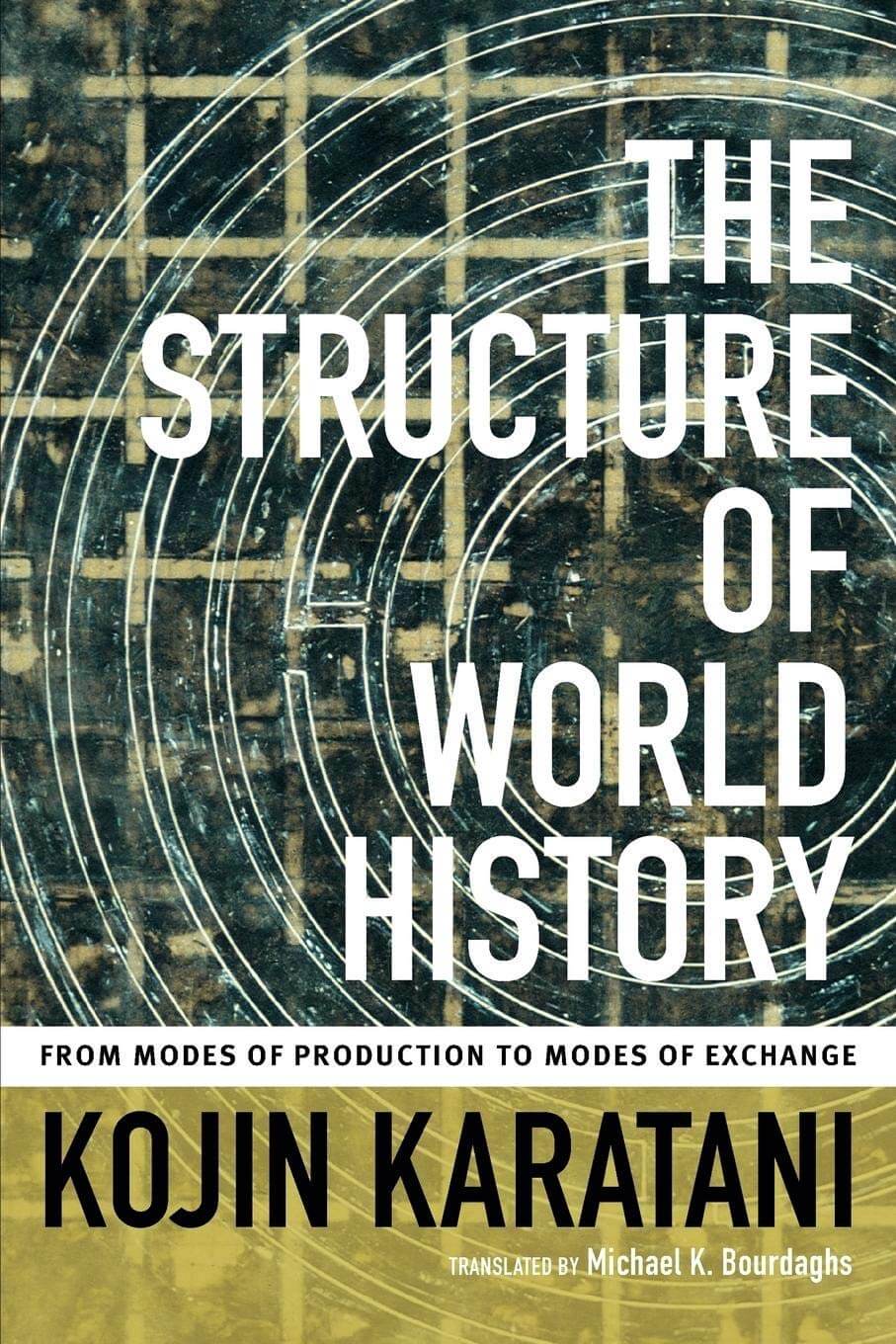
Developed by Japanese philosopher Kōjin Karatani through his seminal work The Structure of World History (and other works), the Modes of Exchange Framework offers a departure from the traditional Marxist analysis that views social relations solely through the lens of modes of production – those who own the means of production and those who work it.
Karatani felt the need to undertake this critique and departure after the collapse of the Soviet Union, which many believe signaled the triumph of Western liberalism and capitalism over communism. Karatani saw a dynamic between capital, nation, and state that other academics and philosophers had yet to notice, leading them to have incomplete interpretations of history that impacted our ability to assess the present historical moment. By developing this perspective, Karatani attempts to rethink history and introduces a new structure by which to do so.
Marxists have used the concept of historical materialism to explain history and its relations, which has proved useful. However, these theoretical frameworks proved insufficient in explaining the complexities and nuances of world history, especially as they pertain to indigenous history and wisdom and the role of universal religions and social movements.
As an institute, we are committed to making the materials and thoughts from his works accessible to all, particularly leaders in social change who can use this material to dream of a new world. With that mission, we have engaged in several projects to help in the dissemination of Karatani’s work:
Resources and Projects
As an institute, we are committed to making the materials and thoughts from his works accessible to all, particularly leaders in social change who can use this material to dream of a new world. With that mission, we have engaged in several projects to help in the dissemination of Karatani’s work:

The Structure of World History (Spanish Edition)
“The Secret Code of Machu Picchu” is a book that delves into the ancient Andean symbolism and design of Machu Picchu. The book is based on the seminal work presented in “The Code of Wira Qocha”. By thoroughly examining and documenting the visual motifs, the book uncovers a hundred previously undisclosed light and shadow motifs from Machu Picchu’s mythological narrative. Readers are invited to unravel the cryptic language of the Inkas by deciphering the spatial, visual, and symbolic dialects embedded within Machu Picchu’s architecture. The expertise of the pacha unancha gellga camayoc guides readers to gain insights into the profound artistry of the sanctuary.
Simultaneously, “The Code of Wira Qocha: Andean Millennial Symbolism” provides a comprehensive exploration of ancient Andean culture, worldview, and symbolism. The book is written by Zadir Milla Euribe, whose multifaceted expertise in fine arts, social sciences, and architecture enriches the understanding and appreciation of Andean cultural heritage for future generations. Beyond academia, Zadir’s influence extends to cultural preservation initiatives. This book offers a timeless lens into the cosmic order perceived by Andean masters over millennia, and it is an essential read for anyone interested in Andean culture and architecture.
The Structure of World History Video Series
Developed by Japanese philosopher Kojin Karatani through his seminal work The Structure of World History (and other works), the Modes of Exchange Framework offers a departure from the traditional Marxist analysis that views social relations solely through the lens of modes of production – those who own the means of production and those who work it.
Marxists have used the concept of historical materialism to explain history and its relations, which has proved useful. However, these theoretical frameworks are insufficient in explaining the complexities and nuances of world history, especially as it pertains to indigenous history and wisdom, and the role of universal religions and social movements.
Karatani felt the need to undertake this critique and departure after the collapse of the Soviet Union, which many believe signaled the triumph of Western liberalism and capitalism over communism. Karatani saw a dynamic between capital, nation, and state that other academics and philosophers had missed, leading them to misguided interpretations of history and unable to accurately assess the present historical moment. By developing this perspective, Karatani attempts to rethink history.
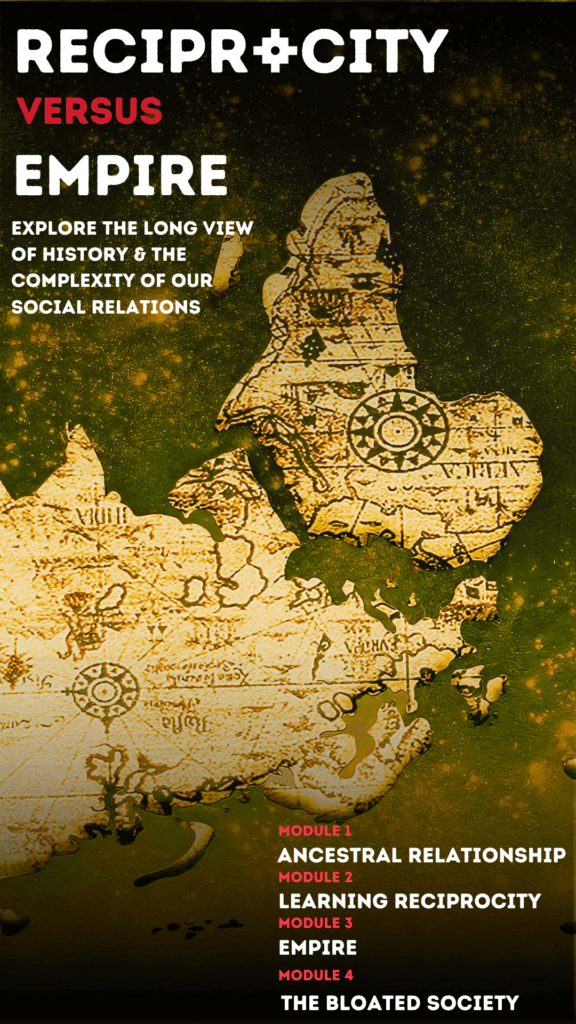
Reciprocity vs. Empire Mini Course
The Reciprocity vs. Empire: The Long View Series mini-course introduces the ancestral concept of Reciprocity and how this stands in contradiction to two of the most important historical processes of the last 5,000 years: domination through empire and accumulation through capitalism.
This mini-course introduces Reciprocity and its different modalities and scales (individually, communally, between communities, etc.) and provides an orientation to the Long View of history, a methodological perspective that allows one to view the roots of our social problems through historical processes over 5,000 years ago and thus grasp the complexity of our social relations today. Through this introduction to the Long View, viewers get a macro and systematic perspective of the origins of some of our most significant societal issues and how to understand them so that we may begin to transcend them and bring about a more reciprocal world.
The first two modules introduce the concept of Reciprocity and provide an introduction to the Long View of History before enrolling by clicking the link below.
The Longview Training
Developed by Japanese philosopher Kojin Karatani through his seminal work The Structure of World History (and other works), the Modes of Exchange Framework offers a departure from the traditional Marxist analysis that views social relations solely through the lens of modes of production – those who own the means of production and those who work it.
Marxists have used the concept of historical materialism to explain history and its relations, which has proved useful. However, these theoretical frameworks are insufficient in explaining the complexities and nuances of world history, especially as it pertains to indigenous history and wisdom, and the role of universal religions and social movements.
Karatani felt the need to undertake this critique and departure after the collapse of the Soviet Union, which many believe signaled the triumph of Western liberalism and capitalism over communism. Karatani saw a dynamic between capital, nation, and state that other academics and philosophers had missed, leading them to misguided interpretations of history and unable to accurately assess the present historical moment. By developing this perspective, Karatani attempts to rethink history.