A decade of movement building.
We are committed to investing in leaders and organizations that strive to build a world of reciprocity.
After the experiences of the DREAM and immigrant rights movement and a decade of community organizing, we started a small training institute called Movement Mastery. Our aim was to provide quality training for working-class leaders.
Over the years, our organization has evolved into the Ayni Institute. As immigrants and children of immigrants, we are former community organizers, movement practitioners, and community leaders. We’ve started organizations, won and lost campaigns, experienced burnout, and found our way back. We’ve faced moments of self-doubt and questioned our ability to effect change. Through it all, we have supported each other and remained dedicated to the journey of social change.
We are committed to investing in leaders and organizations that strive to build a world of reciprocity. Our work includes research, training, coaching, and project incubation, with a focus on social movements and intergenerational indigenous wisdom. By continuing to grow and adapt, we aim to empower a new generation of leaders dedicated to creating lasting and meaningful change.
Ten Moments We’re Proud of
A Brief History of Ayni
- 2012
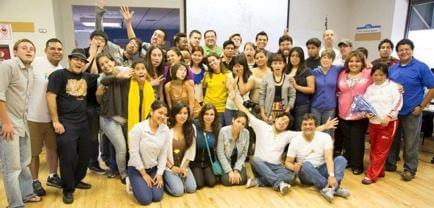
Creating Space for Movement Education
Our First Training: Movement Mastery.
- 2014
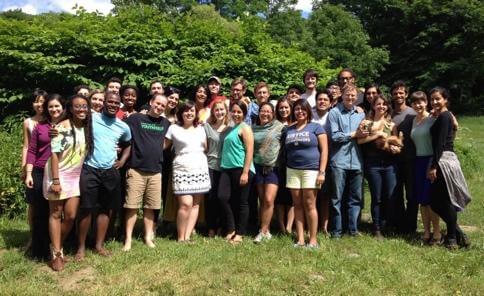
Bringing Strategy to Movements
Our first Momentum Training.
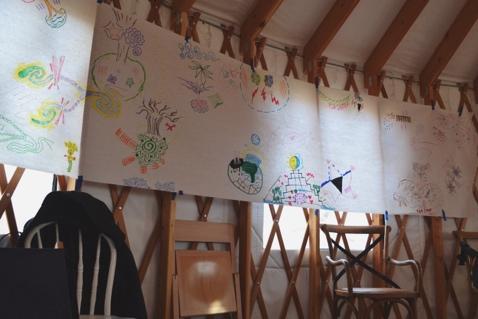
10,000 years of History in 6 days
Our first Long View Training.
- 2015
- 2014-2017
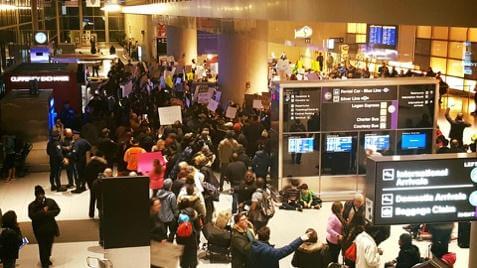
Incubating new projects
Logan Airport Action against the Muslin Ban. Supporting the first years of Movimiento Cosecha.
- 2017
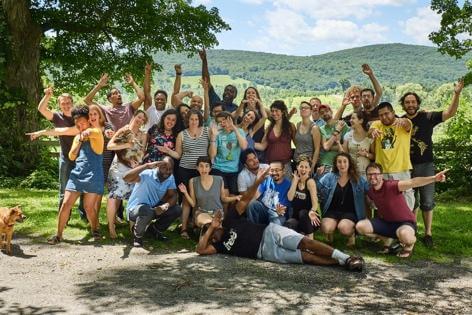
Bringing a system perspective to Movements
Our First Movement Ecology Training.
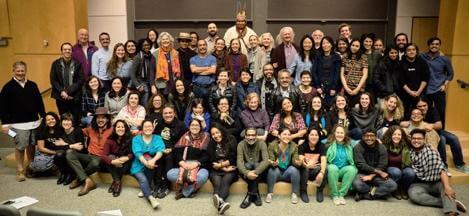
Learning about the cultures of reciprocity and supporting our Elders
Yachay Seminar & Tour with Elders.
- 2018
- 2020
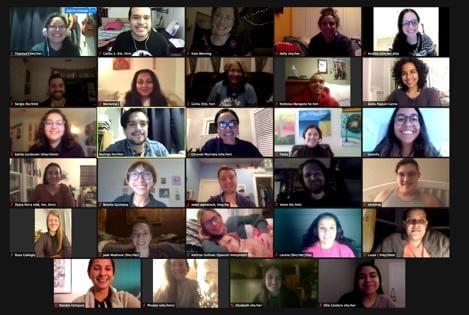
Adapting our work in difficult times
Our 3rd Seeds Cohort adapted to online format in Pandemic Times.
- 2021
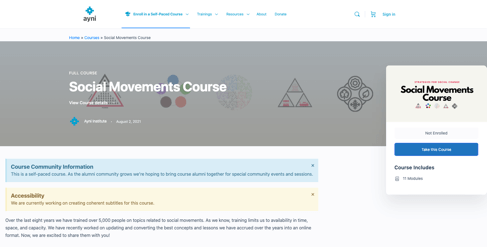
Making all of our trainings accessible
The Launching of our online school.
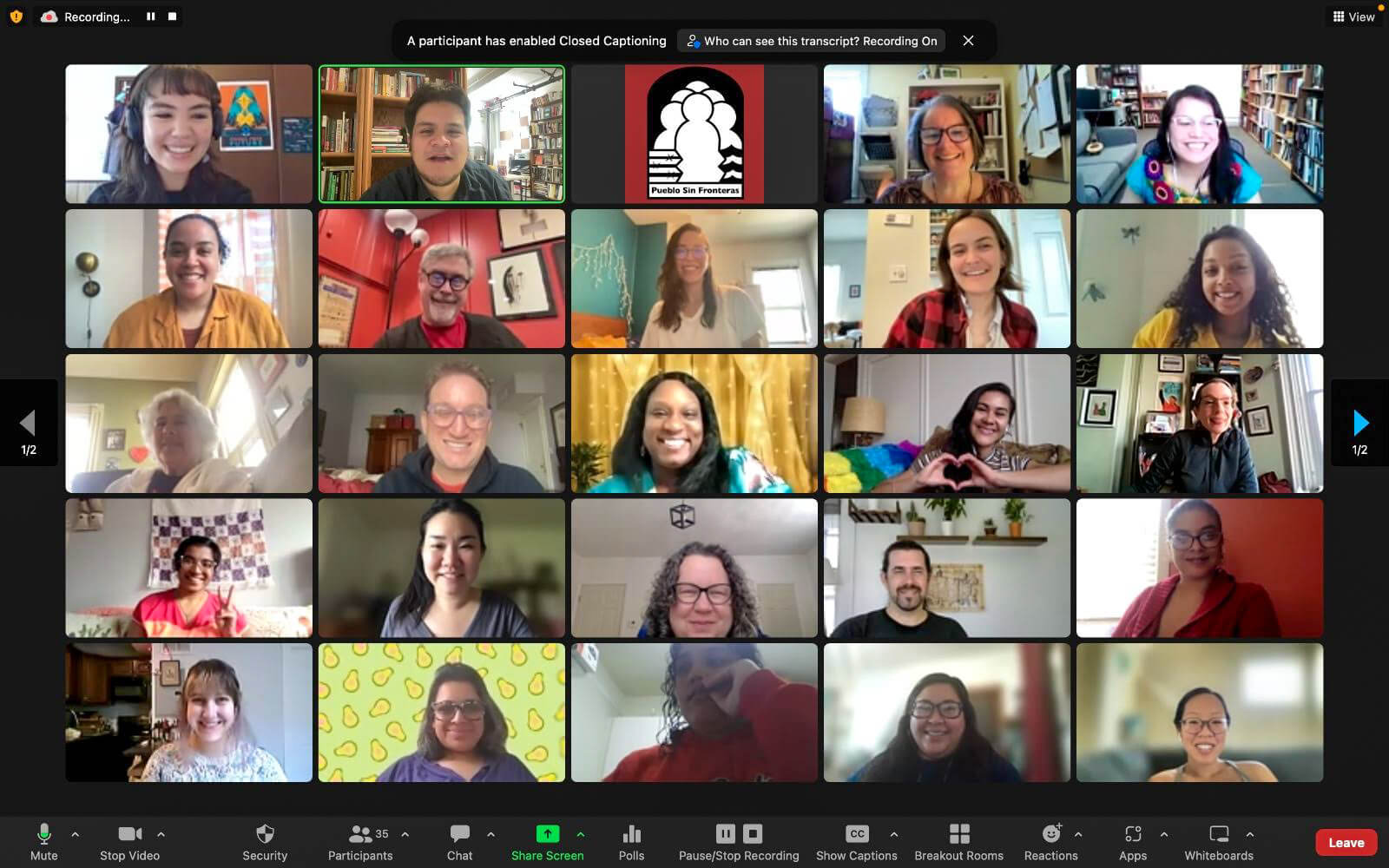
Our first steps into building a mutual aid emotional movement
Our First Mending the Heart Cohort.
- 2022
- 2023

Finding a home for the hard work of Social Change.
Welcoming our Movement Training Center.
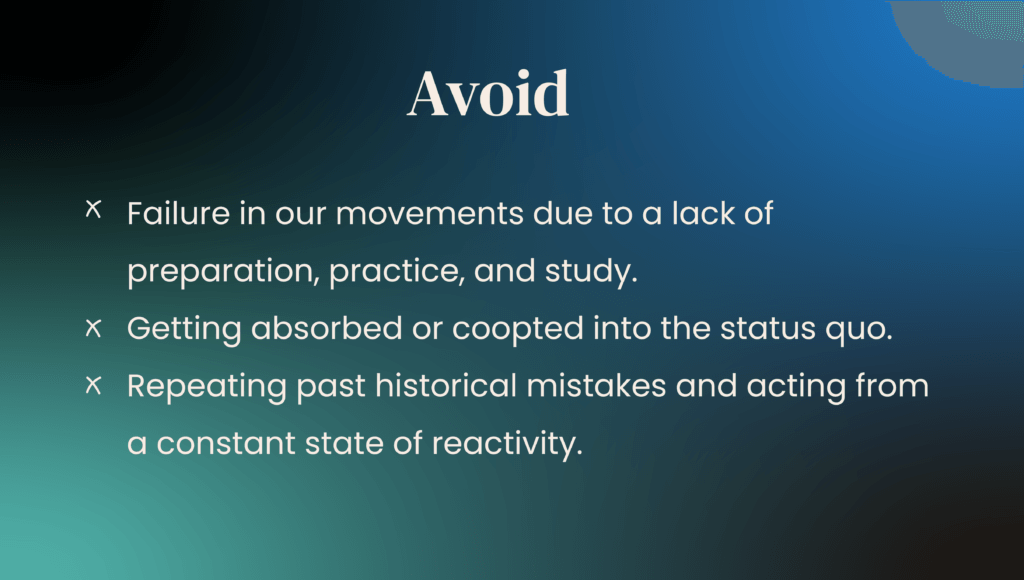
Movements fail due to:
Being co-opted by the status quo
Inadequate preparation, practice, and study
Failed strategies and cycles of reactivity
Stagnation and lack of innovation
Yet we know their true potential
We want to contribute to creating healthy, strong, and resilient movements that can meet people’s needs.
Become
It is inspiring to know that you and those around you are committed to creating intentional and high-quality efforts, striving to achieve changes that once seemed impossible. Together, we hope to turn your ambitious visions into reality.
Our Vision of the Work is to:
Our Team Members
Carlos Saavedra
Carlos Migrated to Boston, MA from Peru at the age of 12 with his parents as an undocumented student. At age 16, he became active in the immigrant rights movement, fighting for equal access to higher education for undocumented youth, and in 2005, he became a co-founder of the Student Immigrant Movement of Massachusetts. Later on, Carlos became the national coordinator for the United We Dream Network in 2009, the first immigrant youth national organization. He led the organizing and campaign efforts that took the network from a loose coalition of 7 organizations to 52 member organizations. After the intense 2009-2010 Dream Act campaign, he was chosen as the 2010 Progressive Activist of the Year by Nation Magazine. He was key in organizing the End Our Pain and Right to Dream Campaigns (2011-2012) that led to the victory of legal relief Deferred Action for Childhood Arrivals (DACA). In 2015, Carlos co-founded Movimiento Cosecha, a national immigrant rights organization fighting for the permanent protection, dignity, and respect for all immigrants. In 2013, Carlos founded the Ayni Institute to provide training, coaching, and incubation of new projects towards social change. Since then, the Institute has trained over 13,000 people in movement building, political education, and organizational development. He is also a co-author of the Funding Social Movements Guide.
Fhatima Paulino
Fhatima was raised in Oakland, California, and is the daughter of immigrant parents from Mexico and the Philippines. A decade ago, she joined the PICO National Network in the Bay Area, following in her mother’s footsteps, to engage in community organizing on issues such as education, immigration, and criminal justice. In 2015, she co-founded Movimiento Cosecha and became its first volunteer organizer, where she played a significant role in its establishment and expansion across the country. Fhatima provided training to thousands of people and coordinated the organization’s activities on a national level. In 2017, she joined the Ayni Institute to work with and learn from South American elders. Since then, she has been utilizing her skills as a trainer, facilitator, and coach to develop training programs that promote a reciprocal world.
Rodrigo Saavedra
Rodrigo Saavedra has been a valued member of the Ayni Institute team since 2016. As an immigrant himself, who has not been able to return to his homeland of Peru since he was four years old, Rodrigo is passionate about supporting Ayni’s vision. During his tenure at the Institute, he has played an instrumental role in developing the Memory Program, overseeing the production and premieres of three feature-length documentaries on Indigenous communities in Latin America under the “Mysteries of the Andes” series. Additionally, he has spearheaded and facilitated several impactful training sessions and conferences, including the Yachay Seminar, where he collaborated with Indigenous presenters from Latin America, The Day of Learning in partnership with Lesley University, where he worked with Indigenous tribal elders from Turtle Island, the Seeds Program, and the Amazonian Healing Cosmovision Training. Rodrigo was also a co-founder of the Ayni School, where he provided his expertise to develop its web-based learning platform, course curriculum (Seeds Course, Social Movements Course), and design. Prior to joining Ayni, he graduated from Clark University, where he majored in International Relations and was recognized as a LEEP Fellow. For three years, he worked as a case manager, assisting asylum seekers through the US immigration system. In 2015, he contributed to the Joint US-China Collaboration on Clean Energy’s environmental report as one of the researchers based in Shanghai, which was presented at the EAT Forum in Stockholm, Sweden. Before that, he worked as a Volunteer Organizer at Movimiento Cosecha, where he supported campaigns and assemblies. He was also a featured guest writer on immigration in The Nation Magazine and a guest speaker on various immigration panels.
Sergio Hurtado
Sergio Hurtado grew up primarily in Buenos Aires, Argentina, and belongs to a family of Nicaraguan immigrants. He completed his double major in Political Science and International Studies from Louisiana State University in 2015. Subsequently, in 2017, Sergio volunteered as an organizer for Movimiento Cosecha and the Immigrants Rights Movement. He played a pivotal role in coordinating and executing grassroots campaigns, including the Manejado Sin Miedo driver’s license campaign, which granted access to driver licenses for hundreds of thousands of undocumented immigrants in several states, namely New Jersey and Massachusetts. In 2021, Sergio joined the Ayni Institute, where he is currently working on the training program, online education curriculum (The Coordination Course), and special political education projects, such as the Modes of Exchange project.
Vanny Huot
Vanny and her family immigrated to the United States in 1981 following their escape from Cambodia as refugees. During her studies in Development and Globalization in Khon Kaen, Thailand, Vanny gained a new perspective on the impact of dominant cultures on the environment and the loss of indigenous culture and wisdom. For the past ten years, she has been working as an urban planner in Revere, Massachusetts, with a focus on designing for people and places, advocating for affordable housing, providing technical assistance to small immigrant-owned businesses, empowering youth, and building communities. In October 2022, Vanny joined the Ayni Institute to continue her journey towards a more reciprocal relationship with Mother Earth and culture. At Ayni, she has been entrusted with the management of Customer Relationship Management (CRM) systems, properties, and assets, fundraising, and providing general operations support. She enjoys plant propagation, hosting communal potlucks, and walking the beach in her spare time.
Mary Diaz Bracamonte
Mary, originally from Peru, possesses more than two decades of accounting experience. In 1998, Mary and her family immigrated to the United States, and to provide for her family, she worked in a variety of positions over the years. Mary’s roles have included working at a chocolate factory, cleaning offices and homes, working as a nanny, and providing income tax support. Mary has always valued Ayni’s work in the community and with the indigenous elders in Peru. In 2019, Mary joined Ayni’s Operations Department, which allowed her to return to her accounting roots. Mary’s hobbies include painting, walking, traveling, gardening, and spending time with her family and friends.
Frequently Asked Questions
What is Ayni? What do you do?
We are a training and research institute for movements and organizations in social change that are seeking to bring about a more reciprocal world. We are dedicated to developing frameworks, material, and content that can help social change organizations and leaders develop strategy and become resilient leaders. We also work to protect and expand the knowledge of indigenous wisdom, reciprocity, and memory, particularly from Latin America, through trainings and other projects of cultural preservation.
What does the word Ayni mean? Where does it come from?
The word Ayni means “reciprocity” in Aymara, an indigenous language from the Andean region of South America. Reciprocity involves both giving and receiving, forming the basis of how we believe we should relate to the world, our communities, and one another. Our first encounter with this concept was through the book Ayni by Carlos Milla Villena. His writings—including works like Genesis—played a significant role in the revival of the chakana symbol, a subject we discuss further below. These books were gifted to us by elders many years ago, and we believe that the change we seek in the world is marked by a return to reciprocal relationships. This shift means moving away from individualism and hyper-consumption and toward a more balanced exchange of giving and receiving. Many Indigenous cultures use words similar to ayni, and even within Andean communities there are multiple terms to describe this mutual exchange, such as minka, which refers to collective work. If you would like to learn more about the different expressions of reciprocity in Andean cultures, you can download La Reciprocidad en el Mundo Andino: El Caso del Pueblo de Otavalo by Luz Maria De la Torre (Achiq Pacha Saqil) and Carlos Sandoval Peralta. We are happy to maintain our connection with and support the legacy and lineage of Carlos Milla Villena’s work through his son, Zadir Milla Uribe, one of our beloved elders in Peru.
What does your logo mean? Where does it come from?
The Ayni logo is in the shape of the chakana, a sacred symbol used by many indigenous groups and nations in South America. The ends of the chakana represent the 4 main stars of the Southern Cross, a constellation only visible from the Southern hemisphere of the world. Again, this symbol comes from Carlos Milla Villena and his great work. The chakana represents a perspective of inter-relationship - that we are part with the world around us and a reminder that we are part of the natural world and that there is a wisdom that comes from the way the natural world is organized. At Ayni we believe in thinking about the ecosystem, the ecology, what is around us, and understand that there is a great wisdom in understanding history, the Long View, and indigenous communities. This is not for the purpose of romanticizing them but instead to have a holistic perspective and approach issues from different angles, as exemplified by the four directions of the cross.
How have you developed your frameworks?
Our frameworks have been developed from years of experience and research in the field of social change. The Ayni team (and organizational partners and collaborators) has decades of combined organizational and social change experience in a variety of roles an organizations that help inform the work we do and the frameworks that we train others on. We are also particularly inspired by and have learned from many of our Elders and mentors along the way who have taught us and have co-created with us. As a research and training institute, we are interested in finding things that are missing or lacking in social change movements. As part of this mission, we are always looking for people that have have expertise and experience in other fields and areas; like our Elders from Perú Alejandrina and Jose Huamán; Paul Engler who has been an Ayni partner and collaborator for many years and has helped develop some of our most important frameworks; and more recently Kojin Karatani, whose work allows us to view history and political economy in a completely different way. We are particularly interested in people who are innovating in the fields of psychology, movement building, politics, community organizing, etc., who we can learn from. Sometimes our role is to produce these the work of these people and sometimes we produce and create our own frameworks, in which we try to explain complex phenomena in simple terms. For example, Movement Ecology is a framework that many people share in social movements and across different areas of social change which we're trying to make it simpler so that we can have a shared language about it. Our Seasons framework is inspired by the work of indigenous traditions, mystical traditions, and personal transformation frameworks that we adapted to social movements and organizations. If you want to learn more about specific frameworks, please refer to topic pages and other material on our site.
How can I request a training?
You can request a training in several different ways:
- If you are an individual who is interested in a training, sign up for it using our Training Pool. Once we receive a critical mass of others interested in the same training, we will reach out to you to coordinate the best date & time for this training.
- If you would like to request a training for your organization, you can fill out our Tailored Training Form.
How is Ayni funded?
We are an institute comprised of a majority of immigrant people of color. Our conception, our vision, has always been about asking “How can we offer quality trainings to people who usually don't typically receive them?” These could be people who aren’t executives but rather leaders from the base, volunteers, etc. For most of our history, we have operated with minimal resources - we fundraised from our training fees, sold merch,items from indigenous communities to raise money for them, and relied heavily on mutual aid from friends and family. We have also received grants that help us cover generational operations support, and have a small group of a few funders who have been instrumental in helping us over the years, which we are very grateful for. We have a very clear rule that we won’t raise money that will prohibit us from having the politics that we desire or would prevent us from working with certain groups. We are not interested in money that will constrain us from what we want to do. We believe we are community workers, meaning that we are here to serve the community. We are not interested in having lucrative or luxurious careers and many of us have sacrificed a lot, be it with our careers or our relationships to pay ourselves a modest livable wage relative to the conditions of where other people are at.
Do you offer scholarships or discounted rates for courses and trainings?
Yes! You can apply for a Reciprocity Scholarship for one of our courses here. We are always trying to make everything we create accessible. Many of our trainings are free, and we offer an unlimited number of scholarships for our material, be it our trainings or self-paced courses. If you don’t have access to resources but want to take some of our material, please just let us know – we will not turn anyone away from anything do to lack of resources.
If you do have the means to support, please donate so that we may keep supporting those who have less. Many people don’t understand why you need to fund training institutes because they just want to fund direct organizations, but they forget that we are also part of the infrastructure of direct organizations.
Do you offer coaching and consulting services for organizations and movements?
Yes, we offer coaching and consulting for social change organizations on a case-by-case basis. If you are interested in receiving coaching support, please send an email to ouraynischool@gmail.com
How can volunteer or get involved with Ayni?
If you are looking to volunteer, thank you! If you want to get involved with Ayni, please fill out this form and let us know what you would like to help with or if there are any skills/gifts you have that you would like to contribute. We will reach back out if we have a specific need that aligns with your skillset.
Are there opportunities for collaborations or partnerships with Ayni?
We are open for collaborations and partnerships for specific projects if they are aligned with our values and current strategic priorities. For inquiries, please send an email to ayni.institute@gmail.com.
Where are you based out of?
We’re based in the neighborhood of East Boston, Massachusetts, where there is a vibrant history of immigrants rights organizing that many of us in Ayni have been part of. We are Wampanoag land and honor the indigenous traditions and cultures from here. Our new training and movement center is located in Revere, MA. We strongly believe that every neighborhood around the world should have their own communal and training center, and are excited about hosting people who come here for our trainings or other programs.
What is the story of 240 Harris Street?
It has always been a dream that we may someday have a space of our own to hold trainings and convene social movement leaders from around the world. We have done trainings in churches, basements, community spaces, parks, retreat centers, and even once in an office room inside a local community clinic.
Only people that organize multi-day events understand the logistics that go into it, and the effort that it takes to pull them off.
In 2021 we began searching for a property that could be our home and a sacred place of learning. We looked in our beloved neighborhood of East Boston, where we have always been rooted. A year later, after looking exhaustively and being surprised with how expensive real estate has become, we found a building that exceeded our expectations: it was in Revere, our sister city; it was walking distance from the Revere Beach train station; it had two stories and a garage; it could fit up to 75 people on each floor; and it had a parking lot in the back.
After visiting the site and doing an inspection, we were sold!
Sadly, as is the case in so many places, gentrification, and its culture have imposed themselves in our neighborhood as well. Because of the real threat of our own little Institute being displaced, we felt that if we had a chance to stay, we needed to take action. So we decided to try to purchase the building before someone else could scoop it up first. We scrambled to learn the process and hired all the help we needed (shout out to CoEverything). We also began an arduous fundraising campaign.
After months of learning, examining, researching, outreaching, and fundraising, we kept feeling the building was right for us, AND we had enough financial commitments to purchase.
In May, 2023 with the partnership of our sister organization Neighbors United for a Better East Boston (NUBE), we signed the closing documents to purchase the building.
Since purchasing, we have been focused on doing repairs and weatherproofing for many years to come. We are still in the process of settling in, if you would like to donate to the building and believe in our training center, you can donate here.
Do you fiscally sponsor groups?
We believe in incubating and supporting existing groups, particularly groups or organizations that are trying to do things differently and innovate. Currently, we are fiscally sponsoring NUBE, Neighbors United for a Better East Boston. Over the years we have sponsored also sponsored Movimiento Cosecha and the Momentum Community. We are currently not taking new requests for fiscal sponsorship but might be open to it in the future.
What does your relationship with your elders look like?
We feel very grateful to have Elders that we have known for many years and cherish the deep relationships we have built with them over time. Our primary approach to our Elders has been to be supportive of them in their projects. We have invested time, capacity, and money in supporting them in their individual projects; these include writing books, the Mysteries of the Andes film series, the creation of paintings and fine art, and supporting them sell products that they have created here in the US and sending the profits back to them. All of the resources we give to our Elders we give from our training fees or from sales that come from our Ayni store. We are hoping we can continue to do that through our Memory Fund, the new painting series from Zadir Milla, and the 4th film of the Mysteries of the Andes series, Nuna. We have also brought our Elders to the US and have given them a modest stipend to do trainings and lead educational workshops for people here in the United States.
Thank You
We would like to express our gratitude to all the individuals who have supported us emotionally, strategically, and financially in the establishment of the Ayni Institute. Firstly, we extend our heartfelt thanks to our elders in Latin America for serving as our teachers, mentors, and sources of inspiration. Secondly, we appreciate the numerous organizations and social movements with whom we have collaborated and been a part of throughout our journey. It’s a source of hope for our intstitute to see so many people dedicate their lives to the work of social justice.
Lastly, we are only able to give what we have been given. Thank you to all of our parents, ancestors, cultures, and Mother Earth, for giving us the life and wisdom to continue weaving a reciprocal future.