
Thank You for Building with Us
Thank you to everyone who joined us for the 3-day Seasons of Leadership Retreat. It meant a lot to be in a space with so many thoughtful, committed leaders—learning together, asking hard questions, and reflecting on what this moment is asking of us.
We’re planning to host another Seasons of Leadership Retreat in 2026. If you’d like to stay in the loop, you can sign up for updates using the form below.
Hope to keep building with you.
The Ayni Team
About The Training
About Ivan
What You’ll Learn
Over three days, participants will move step by step through the full campaign-planning process:
- Identify Issues & Map Power – Understand the terrain and locate leverage points.
- Develop Strategy & Sequence Tactics – Build campaigns that move strategically toward real outcomes.
- Craft Messages That Move People – Communicate in ways that inspire action.
- Prepare for Repression & Backlash – Strengthen resilience in difficult political climates.
You’ll practice building a draft campaign plan in learning teams through a collaborative process you can take back and apply with your own organization.
You can learn more about Ivan’s methodology in his book The Path of Most Resistance: A Step-by-Step Guide to Planning Nonviolent Campaigns. A copy of the book will be provided to all participants upon arrival.
Who Should Attend
This Level 1 training is for individuals and teams ready to design and lead campaigns aimed at mobilizing public participation, including:
- Organizers building mass engagement around an issue
- Members of movements, coalitions, advocacy groups, or volunteer-led efforts preparing to launch or strengthen a campaign
- Activists who have organized protests or actions and want to develop a full campaign strategy
- Anyone interested in learning from the global tradition of civil resistance and applying those lessons to their work today
Applications are open to individuals and team participants who are already working together, or who plan to work together, on a shared issue, campaign, or organizing effort. If someone signs up on their own, we’ll place them in a group with others doing the same. Together, they’ll work on a campaign for the exercise—either one of theirs or a shared case—so they can go through the process as a team.
Participants are encouraged to come with a specific issue, campaign, or organizing challenge they want to develop during the training.
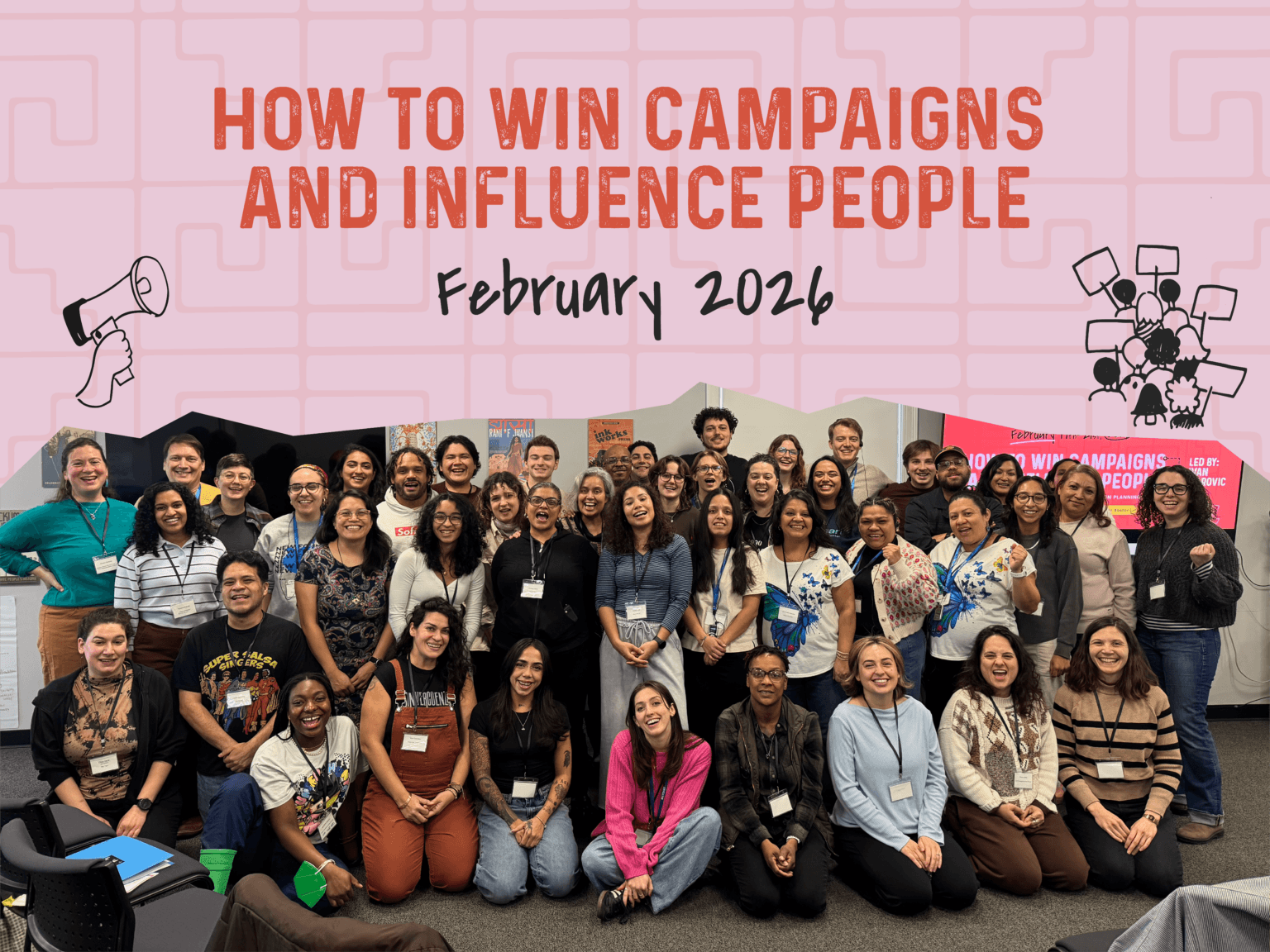
While our february training has spanned a wide range of issues, this upcoming training is centered on three priorities. We are looking for groups working in: (1) upcoming elections, (2) challenging the mass incarceration system, and (3) climate campaigns.
For groups organizing around elections, we mean teams working to increase voter turnout, prevent electoral manipulation, challenge authoritarian forces, expand voter education, and strengthen democratic processes at the state and local levels. For groups working on climate campaigns, this could include a range of efforts, with particular interest in campaigns to stop AI-driven data centers and other harmful projects. For groups challenging mass incarceration, this may include efforts to stop prison construction or closures that harm communities, expand the rights of incarcerated and formerly incarcerated people, and advance broader decarceration strategies.
Trainers & Partners
The Structure
Format: In-person
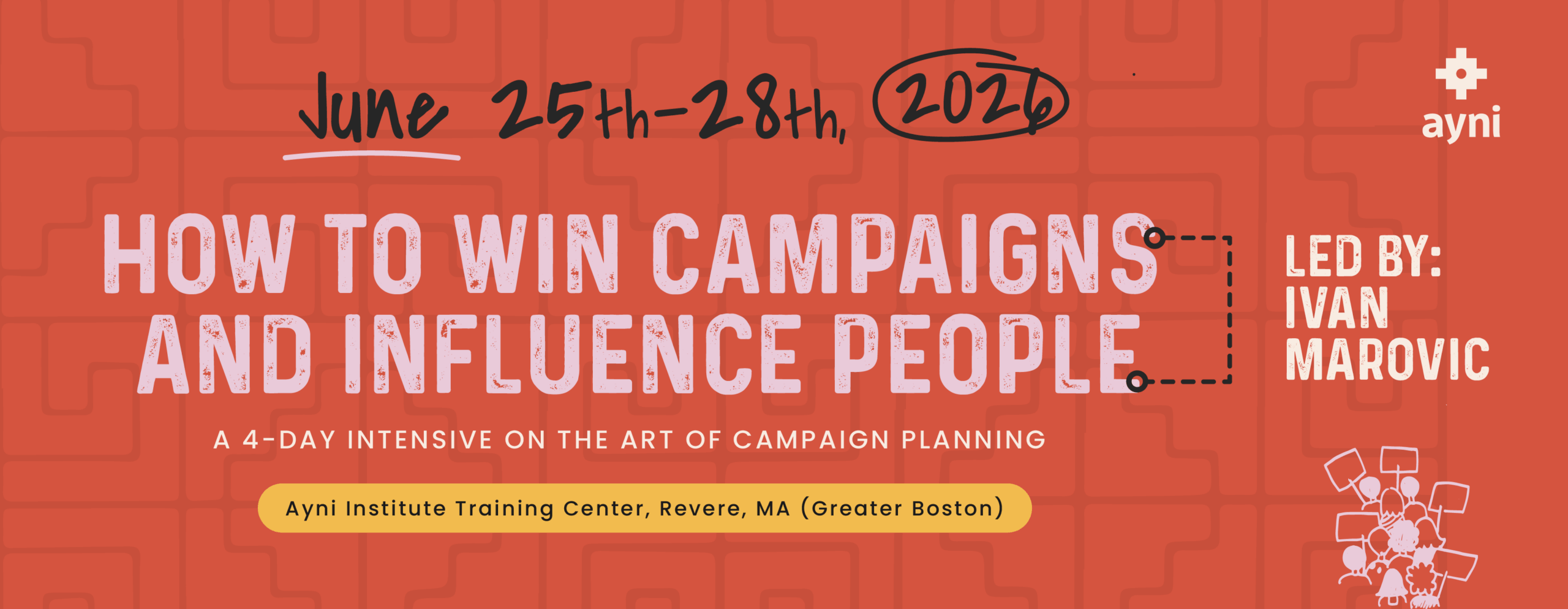
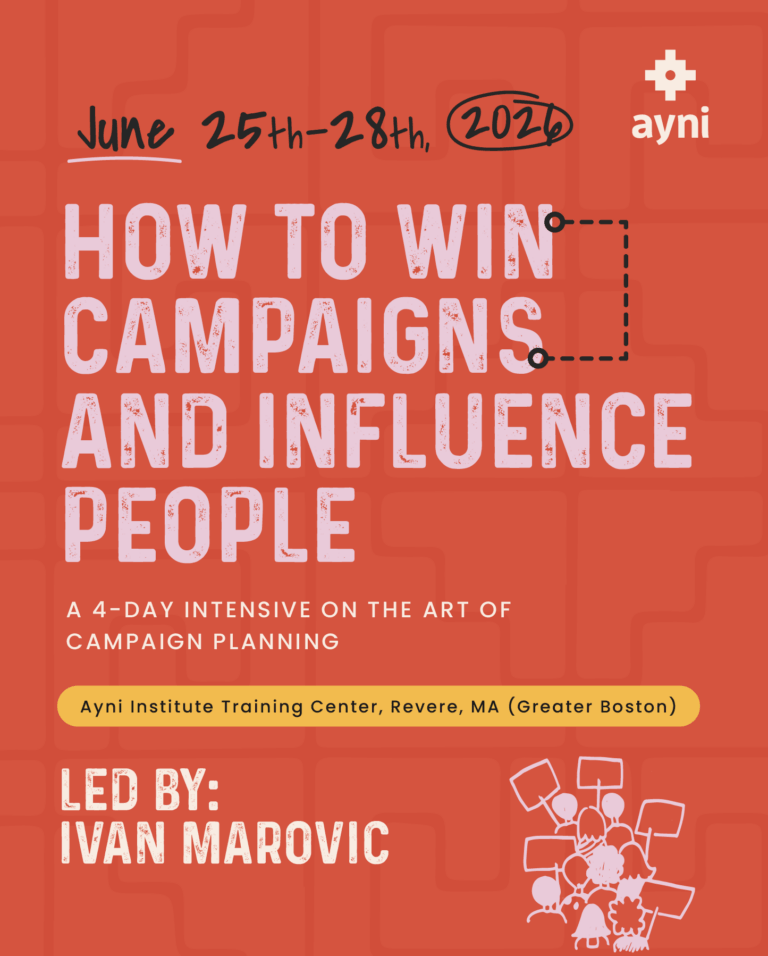
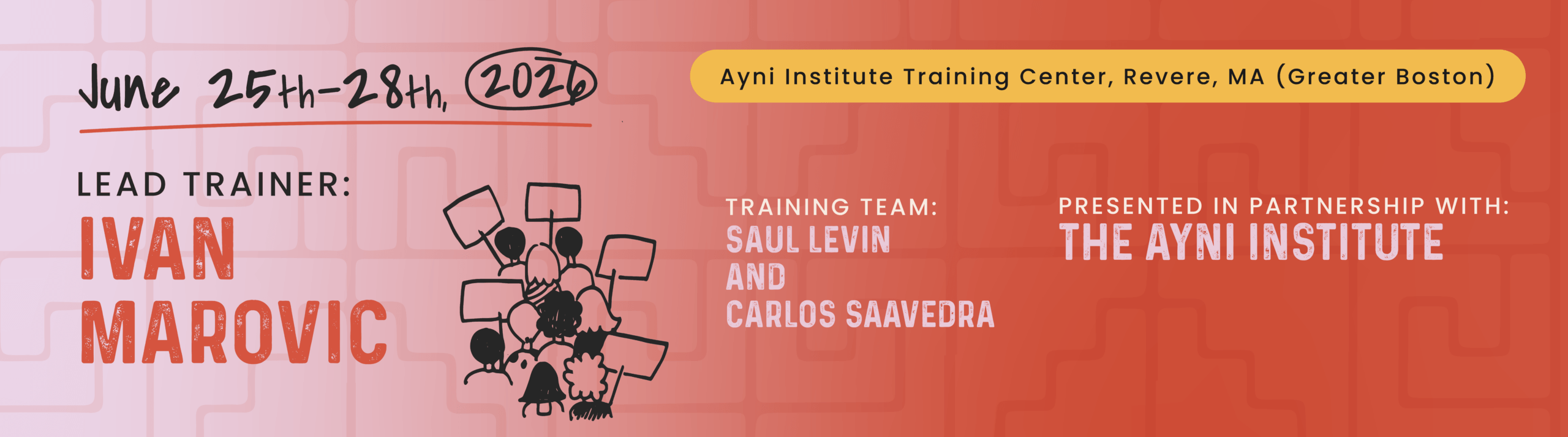
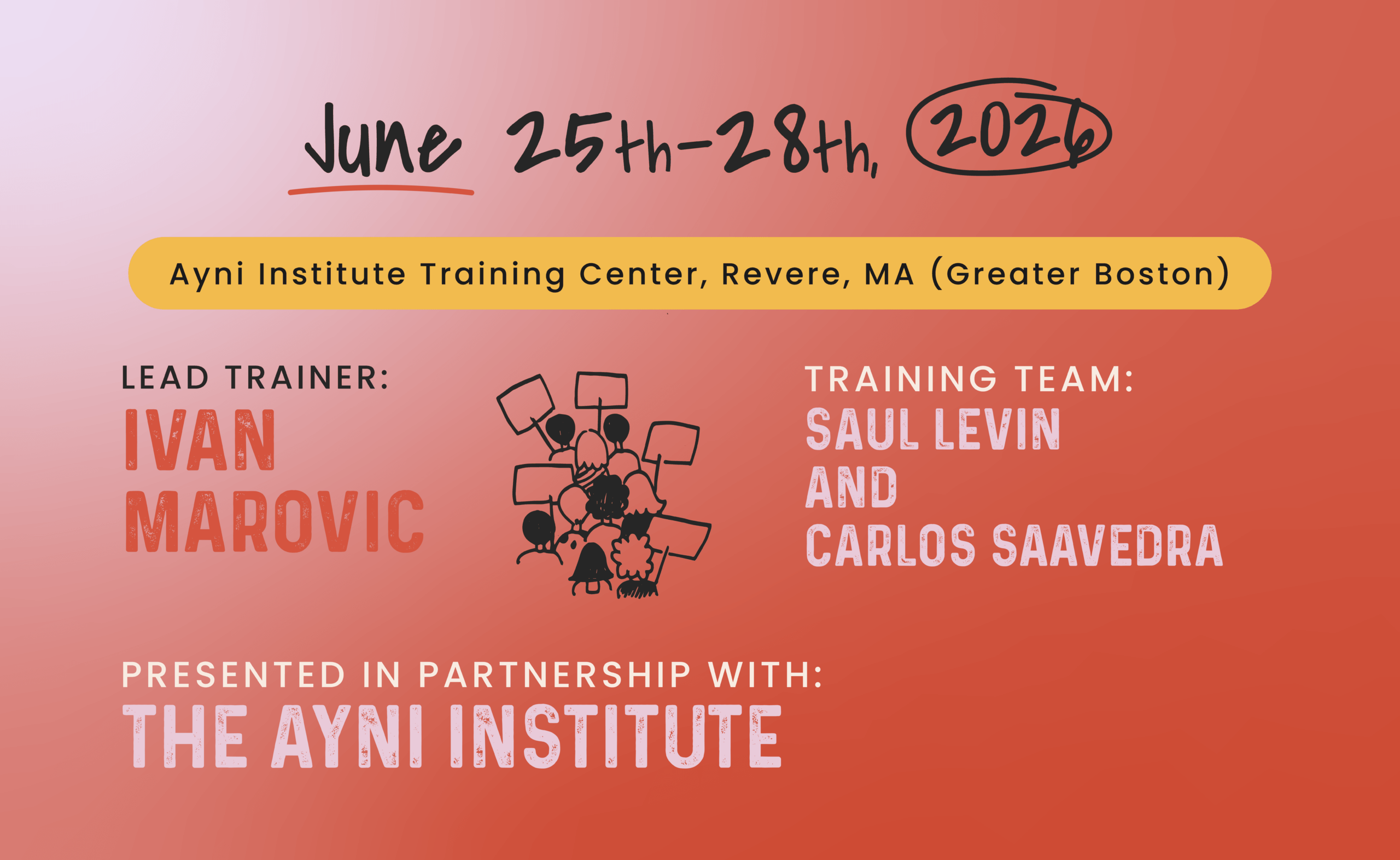
Duration: Thursday, June 25 – Sunday, June 28, 2026
Sessions:
- Thursday: 4:00 PM – 7:00 PM
- Friday–Saturday: 9:00 AM – 6:00 PM
- Sunday: 9:00 AM – 1:00 PM
The priority application deadline is May 1. We will begin reviewing applications and sending acceptances shortly after that date.
Additional applications will be accepted on a rolling basis until May 22, space permitting.
Retreat Format
- Deep Personal Reflection – To reflect on key questions, discuss key frameworks, and assess how we’re doing in our leadership.
- Group Sharing – Share vulnerable stories in order to process what we have been through with people that going through similar things. Sometimes this format allows for participants to feel seen, relate to others, and create an atmosphere of support for people’s journeys in social change.
- Awareness practices – To be present and come back or take respite from potentially emotionally charged group shares (i.e. guided meditation, ritual, breathing and movement exercises).
- Communing practices — Both open and structured time to relate with one another and with nature. This can include taking walks together, doing ceremonies, music jams, campfire conversations, etc.
Day 1 Thursday
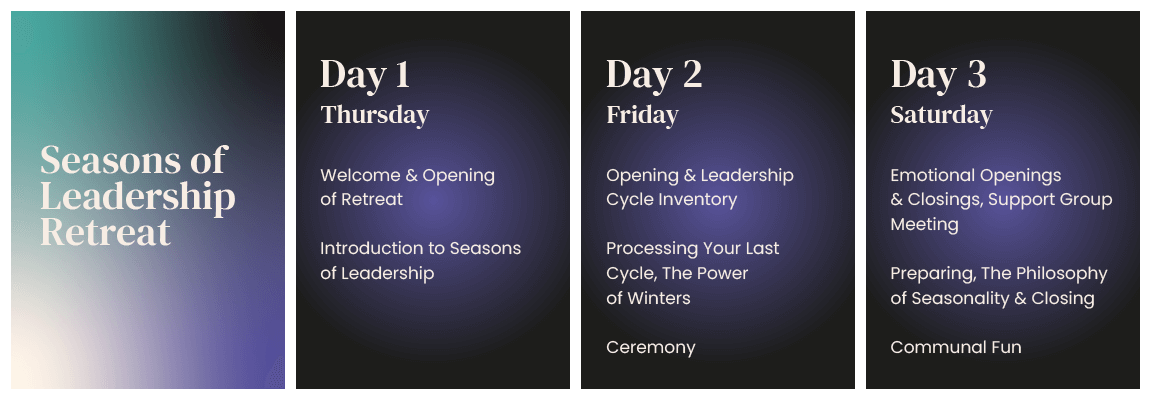
3:00 pm Welcome & Opening of Retreat
5:00 pm Dinner
6:00 – 8:30 pm Introduction to Seasons of Leadership
- We’ll review the framework of Seasons & Cycles so that everyone has a baseline on the concepts we will be diving into. You will also begin to identify the season you are in.
Day 2 Friday
8:00 am Breakfast
9:00 am – 12:00 pm Opening & Leadership Cycle Inventory
- You’ll take the time to map your leadership journey in order to visualize the ebbs and flows of your last 7 years. Understanding where you’ve been will support in determining where you are going.
12:00 pm Lunch
1:00 – 5:00pm Processing Your Last Cycle, The Power of Winters
- Emotionally process what you went through during your last leadership cycle in small groups. We will also explore the power of Winters and techniques for how to navigate them, as well as what it means if you have not taken a Winter in a long time.
5:00 pm Dinner
7:00 pm Ceremony
Day 3 Saturday
8:00 am Breakfast
9:00 am – 12:00 pm Emotional Openings & Closings, Support Group Meeting
- Understand and protect the season you are in by processing where you’re currently at in your leadership, and understand how the seasons affect your patterns of regulation and disregulation (of being emotionally open or closed). In other words, you’ll gain a macro perspective of what you’ve gone through (and will go through) emotionally through your seasons.
12:00 pm Lunch
1:00 pm – 6:00 pm Preparing, The Philosophy of Seasonality & Closing
- Prepare for the rest of your cycle by creating new habits, identifying support and intentionally undoing/subtracting in order to add more to your leadership. We will also explore how to compliment the season your organization is in and how to navigate any tensions where there is a difference in season (colleagues, organization, movement, etc).
6:00 pm Dinner
8:00 pm Communal Fun
The Practical Stuff
Logistics and COVID Precautions
Meals: Breakfast, lunch, and dinner will be provided.
COVID precautions: We ask that everyone test for COVID before arriving. If you have any symptoms, we ask that you notify us and refrain from coming. Thank you in advance!
Training Cost Pricing Guide
Below is the cost to attend this training. Please choose your rate accordingly (more information on the difference in tier are below). Payment plans are available upon request (for example, paying over the course of 3 months).
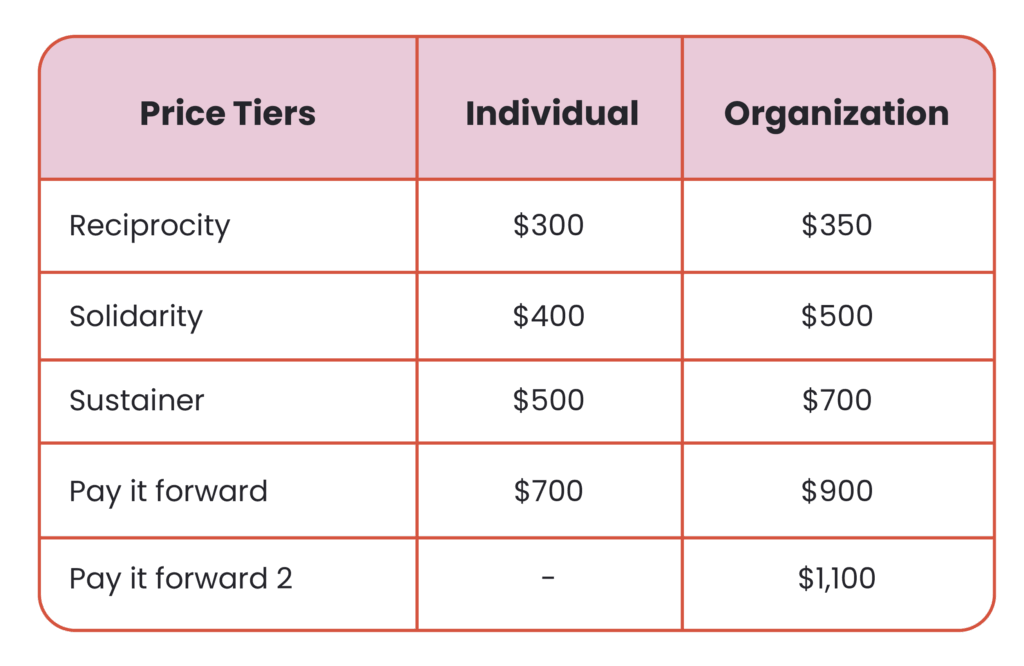
*Payment plan available upon request (for example, paying over the course of 3 months).
Please refer to the next two tabs to check the pricing guides.
Individual Pricing Tiers In-Detail
Essentially, you have a hard time meeting your basic needs, you work in social change, or are not affiliated with an organization that can sponsor your enrollment.
Stability on Meeting Basic Needs
- I am unemployed or underemployed
- I frequently stress about meeting basic needs & don’t always achieve them
- I rent lower-end properties or have unstable housing
- I don’t have transportation and/or have limited access to a car
- I cannot afford a vacation or have the ability to take time off without financial burden
Wealth & Debt
- I have debt and it mostly prohibits me from meeting my basic needs
- I have no access to savings
- I qualify for government assistance including food stamps & health care
- I have no or very limited expendable income
- I rarely buy new items because I am unable to afford them
- I do not have or expect to inherit money or property
Education & Immigration Status
- I may not have completed high school or GED, or have limited experience with higher education
- I do not have U.S. Citizenship & do not qualify for any government assistance
You can meet some of your basic needs but don’t have long-term security. If you identify with all or the majority of the indicators please select this tier.
Stability on Meeting Basic Needs
- I rent lower-end properties but have stable housing
- I have access to transportation or have access to a car
- I am employed, underemployed, living paycheck to paycheck
- I have limited amounts of expendable income
- I don’t often buy new items (but I can if needed) and I thrift other items
- I have very limited funds for a vacation
Wealth & Debt
- I have debt which could prohibit me from meeting my basic needs, but I am currently able to make monthly payments
- I might have access to government assistance or subsidies
- I might have a little savings saved up
- I do not have a safety net composed of “financially stable” or wealthy family and friends
Education & Immigration Status
- I might have attended a community college or public higher education institution
- I have not attended private education institutions or have an advanced degree
- I have work permit, TPS or employee sponsorship providing me some income to meet my basic needs
This is for individuals who are able to meet their basic needs and have the support for long term financial stability and ability to pay the actual cost without being financially burdened.
Stability on Meeting Basic Needs
- I own or lease a used or lower end car & have access to transportation
- I am employed/have stable income
- I have access to health care (private or public) & don’t rely on government benefits
- I can take a vacation annually or every few years without financial burden
- I qualify for first time home buyers programs or subsidies to purchase a house or property
Wealth and Debt
- I might have debt but don’t usually stress about meeting my basic needs and regularly achieve them
- I have access to financial savings
- I have expendable income
- I am able to buy mostly new items
- I am expecting to inherit small amounts of money or property
Education and Immigration Status
- I have U.S. Citizenship or other citizenship that allows me freedom of mobility
- I might have private education institutions or have an advanced degree
This tier is for higher-earning individuals that can meet all of their basic needs, have support for long term financial stability, has built wealth with the ability to share their abundances.
Stability on Meeting Basic Needs
- I am comfortably able to meet all of my needs & desires
- I own my home or property OR I rent a higher-end property
- I own or lease a higher end or multiple car(s)
- I have regular access to health care
I am employed or do not need to work to meet my needs - I have a safety net composed of “financially stable” or wealthy family and friends
Wealth and Debt
- I have access to financial savings & access to wealth
- I have an expendable income
- I can always buy new items
- I can afford an annual vacation or take time off when needed
- I own property or multiple properties
- I have and/or expect to inherit significant money or property
Education and Immigration Status
- I have attended a private education institution or have an advanced degree
- I have U.S. Citizenship or other citizenship that allows for mobility around the world
After reviewing the tier qualifiers, please select the one you self-identify with and the price rate that applies to your tier. Things to consider when reviewing the following tiers:
The following is our guide to help you think about what rate you qualify for and doesn’t encompass all of your personal factors.
Please make sure to consider any personal financial responsibilities; work, family, health, etc. when selecting your tier. You do not have to meet all the factors to fall into a category. Instead, these should be guideposts to help you think about what tier you qualify for. If most of the qualifiers describe you or your situation, you are in that tier.
Organization Pricing Tiers In-Detail
If you are an emerging, nascent organization within your first 3 years, or under resourced with a budget under $150K, your organization falls under this tier.
You are a small to midsize organization with a budget ranging from $150 – $600 K.
Your are an established organization with a budget within the range of $600 – $1.5 million annually.
You are a stable organization with a budget of $1.5million+.
You are a stable organization with a budget of $5million+.
Location
Reimbursement Policy
For In-Person and Online Trainings
Community Voices
“I’m the Ecology Director for Climate Revolution Action Network. We’re a Gen Z-based group that leads climate initiatives across New Jersey, as well as other political issues. That’s why I’m here at this training with two of my fellow colleagues, and we’re learning how to lead groups of young students and younger leaders who want to contribute to improving the way we’re living in New Jersey and across America.
Altogether, we’ve learned so much, and it’s so awesome to be able to know how to strategize certain campaigns and use different tactics to add on to a campaign, rather than just really focus on making a video or making a social media post. Now it’s more broad, yet also very specific, and it gives us more initiative to lead and makes us better leaders.
Altogether, amazing.
I absolutely would recommend this training. This is the best training I’ve ever gone to, and I’m going to take everything that I learned today and over the past two days with me forever. It’ll stay with me forever.”
– Kayleigh Henry
Climate Revolution Action Network
“I’m from Sunrise Orlando, and prior to this training, I had so many amazing conversations with the people who work on my campaign with me. However, I feel like we didn’t have the structure of writing things down, and some things would get scraps, but then other ideas would go, and there would be no plan. It was just an idea without the structure. So coming into this campaign training, I learned so many things. It’s not only the structure of what we’re doing, but why we do it, who we’re trying to talk to, and how we can move them, and it has made a world of difference.
I look forward to going home, sitting everybody down, and saying, I know you’re all brilliant, and I know what we want, but now this is how we’re going to structure it so that we can get things done.”
– Aija Diaz
Sunrise Orlando