
First and foremost, we’d like to express our deepest gratitude to the past movements and political traditions, to all the people that we have learned from who have passed and are still with us, who have contributed through their writing, experiences and struggles. We know we are standing on the shoulders of history and we are grateful to our ancestors who have been on this path before and those who are alongside us.
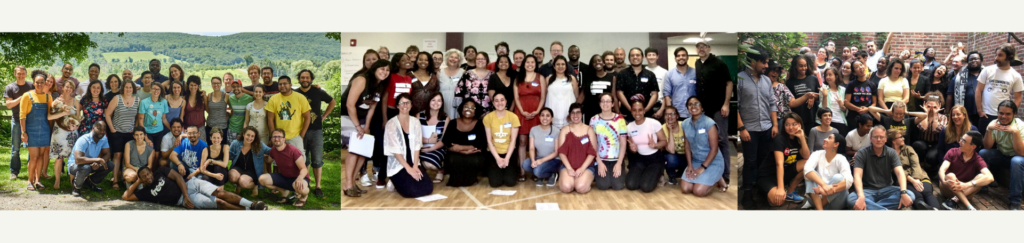
We also want to thank the many people who have facilitated and participated in our trainings, and have given us feedback, have supported us, and have trusted us with their learning and development. We particularly want to appreciate James Hayes, Sophie Lasoff and Heleena Matthew for their support as core staff in our past trainings and projects related to this course.
Finally, we are grateful to Open Philanthropy for supporting us during our development process.
This course’s concepts, curriculum and topics were developed by Carlos Saavedra, Fhatima Paulino, and Rodrigo Saavedra in collaboration with Paul Engler.
Editing and Post-Production support was done by Walter Hergt. We are very grateful for all the ways that he lended support, expertise, and advice in our post-production process. Thank you, Walter!
The Animation for our module named “Movement Ecology” was done by Mayra Alexandra Cortez Calancha. Thank you Mayra!
Below is additional information on our course’s team:
- Carlos is a community leader that works to bring a vision of reciprocity into the world. He has been a community organizer in the immigrant rights movement for the last 17 years, building and co-founding organizations such as the Student Immigrant Movement (SIM), the United We Dream Network and Movimiento Cosecha. He also believes in a long term vision that in order to bring justice into the world we must renew our world cultures and religions to be closer to Mother Earth and Reciprocity.
- Rodrigo‘s drive to support community organizing efforts and educational experiences stems from his journey of being an immigrant who has been unable to visit his home , Peru, since he was four years old. When he was a teenager he joined the Student Immigrant Movement and supported immigration reform efforts and campaigns. Rodrigo graduated from Clark University where he studied International Relations and was named a LEEP Fellow. For three years he worked as a case manager supporting undocumented youth with their asylum cases. Before joining Ayni he worked as a volunteer organizer with Movimiento Cosecha assisting campaigns and national assemblies. He has also been a featured guest writer in publications such as the Nation Magazine and a guest speaker on various immigration panels.
- Fhatima grew up in Oakland, CA and is a daughter to immigrant parents from Mexico and the Philippines. 10 years ago, following her mother’s footsteps, she joined the PICO National Network in the Bay Area to do community organizing on issues such as education, immigration, and criminal justice. In 2015 she became the Cosecha Movement’s first volunteer organizer and supported its seeding and growth across the country. In 2017 she transitioned to Ayni Institute to support and learn from elders in South America, and has been using her skills as a trainer, facilitator, and coach to co-create trainings that build towards a reciprocal world.
- Paul was a co-founder of Momentum, which instructs hundreds of activists each year in the principles of effective protest. He is co-author, along with Mark Engler, of the influential book on the craft of mass mobilization, This Is an Uprising: How Nonviolent Revolt Is Shaping the Twenty-First Century (Nation Books). Paul is the founder of The Center for the Working Poor in Los Angeles, California, an intentional community with core principles of Strategic Nonviolence, Voluntary Simplicity, Intentional Community, Hospitality, Community Building, and Spirituality and Faith in Action. Paul worked as a community organizer for low-wage workers in the 2000’s, and was involved in multiple social movements including the global justice movement, the anti-war movement, the immigrant rights uprising in 2006, and Occupy Wall Street.
About Instructor

Course Includes
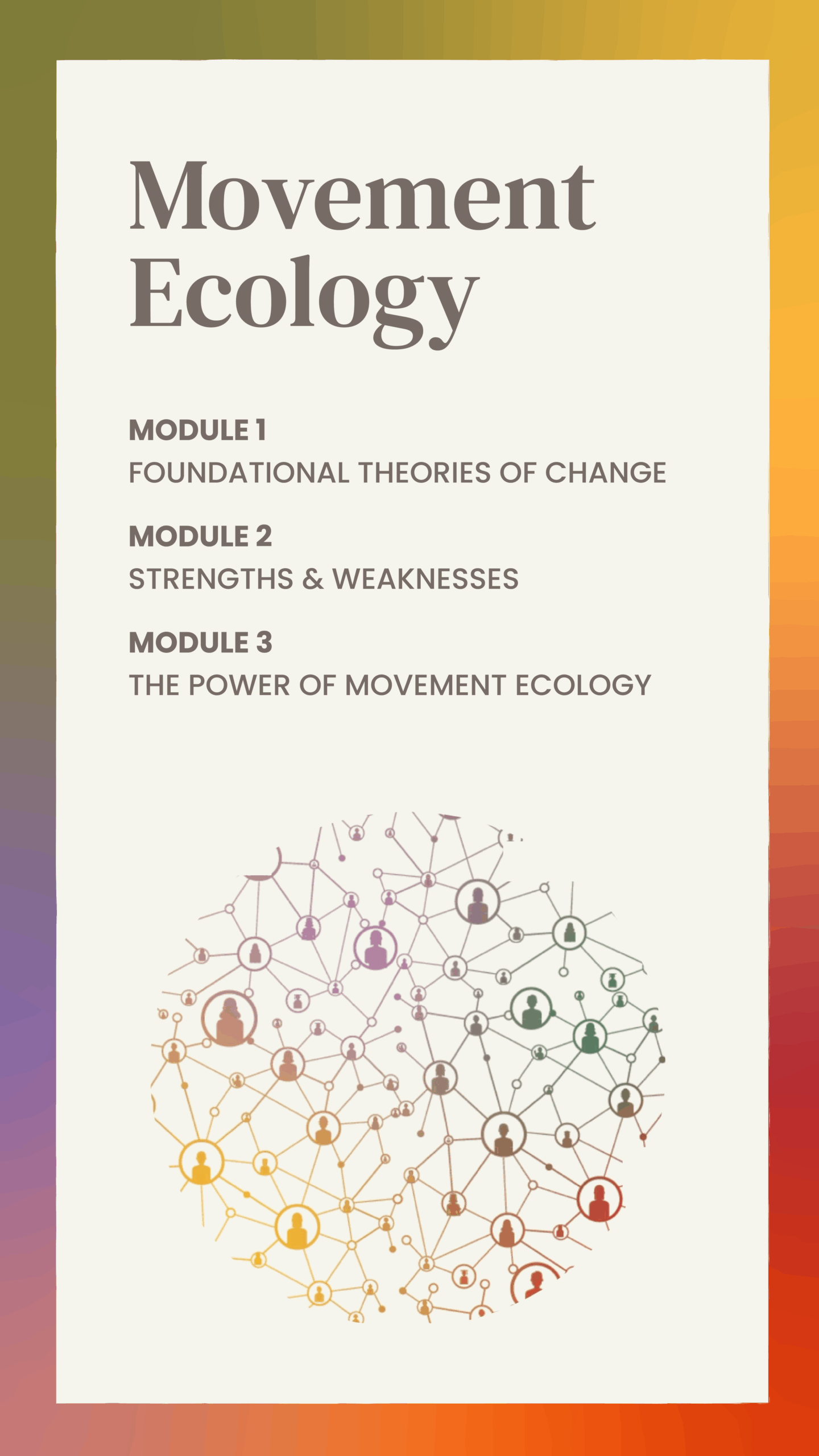
- 3 Modules